
Rabbit Rabbit
Joel Marquard, Anna Homler, Weird Studies


Rabbit rabbit.
As we start a new month, a brief digression into self promo mode: I started the new year by launching a new label, Always Happening Records, with a 7” single by Joel Marquard’s art-pop project Spiritual Warfare and The Greasy Shadows: “All For You” b/w “Search Party,” two songs featured on his double album digital release “Rabbits, Like...In A Meadow.”
This last week, I spent a lot of time with Joel as part of the Always Music in the Air tribute to David Lynch, which we staged in Phoenix and Tucson. Joel sang a number of the crooner varieties: “Wicked Game” by Chris Isaak, Elvis’ “Love Me Tender” and “Love Me,” and Roy Orbison’s “In Dreams.” For the Lynch tribute, he was revealed on stage as, more or less, a normal dude. A cool looking one, certainly, dressed suavely in a vintage bomber and sometimes lit a ala Dean Stockwell’s Ben in Blue Velvet.
Marquard performs at MySpace February 21, 2026.
But as Spiritual Warfare, he brings an element of avant-pop theatricality to the table, draped in robes, layers, and beads.
Back in 2022, I joined Joel at Easy Tiger Bar to perform alongside Starflyer 59/Fine China/Prayer Train spin off band Red Strat. The juxtaposition of the headliners’ amped up bar rock with Joel’s arcane presentation was mind bending. I’ve watched Joel’s on-stage characters and personas morph for two decades. Spiritual Warfare presents his strangest form yet.
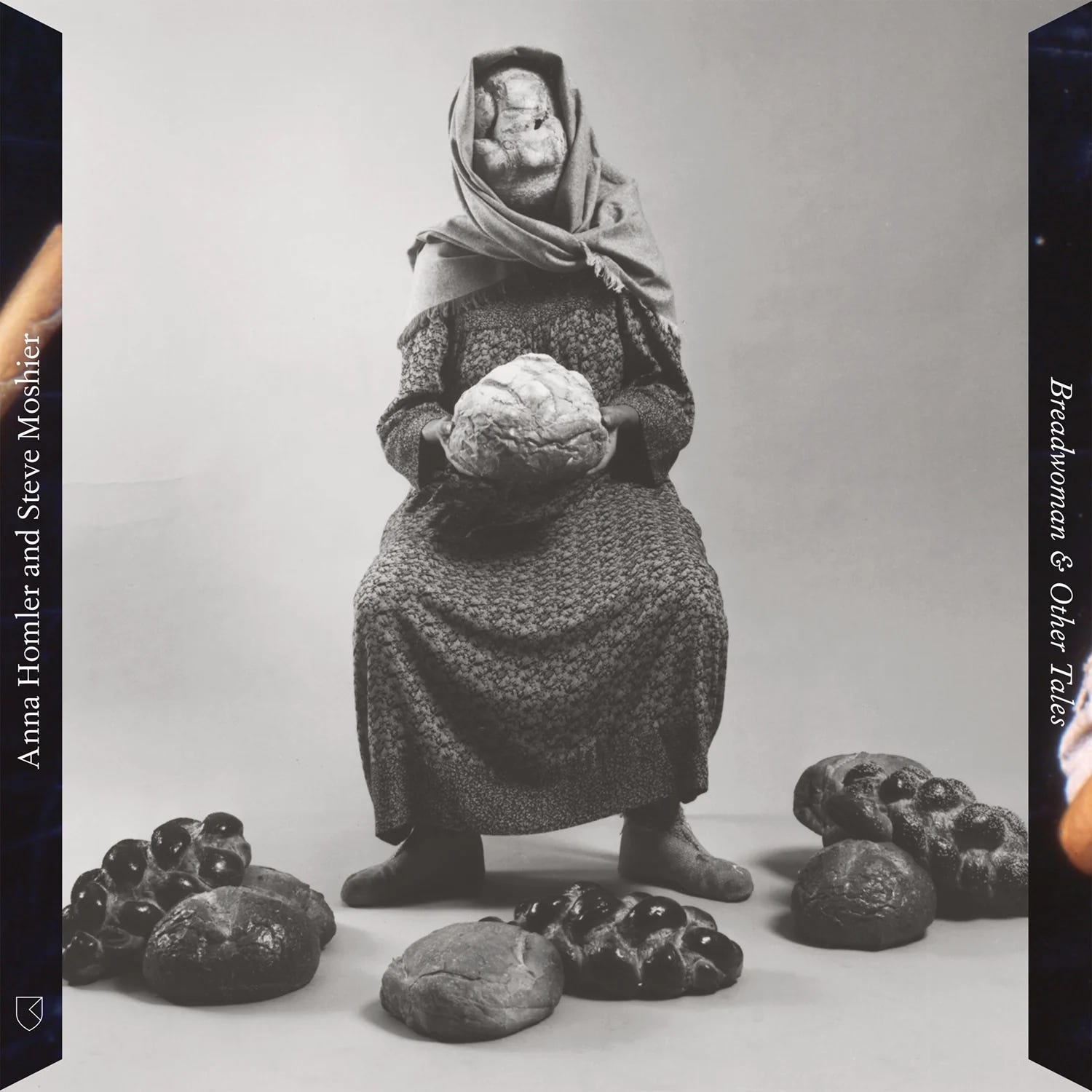
Bread Like Stones: Anna Homler’s Breadwoman
The very first time I saw Marquard perform in the Spiritual Warfare garb, I was reminded of California performance artist Anna Homler’s Breadwoman. The genesis of Breadwoman stretches back to the early ’80s, when performance artist Anna Homler found herself singing while driving through Topanga Canyon, chanting out in a strange, rhythmic cadence. Homler’s melodies weren’t from any language she recognized, but felt like more than just absentminded moans or nonsensical babbles to her. “I still remember the moment,” Homler says. “It was a language I didn’t know but it was musical and melodic.”
She began to tape these songs, and a few years later teamed with experimental composer Steve Mosier to shape them into an album called Breadwoman, named for a character she’d developed around the songs: a woman, her face and body obscured by bread, an mythic representation of a woman “so old, she’d turned to bread.”
Released in 1985, the album represents the intersection of experimental art, tape culture, and electronic music in Los Angeles in the 1980s. It’s collected, along with two more compositions, as part of RVNG Intl.’s Breadwoman & Other Tales. The collection is beautiful and otherworldly, Homler’s glossolalia drones playfully weaving in and out of Mosier’s bending synth melodies, sound effects, and rhythms. There are nods to various cultures—tonal similarities to African, European, and Native American musics—but their experiments feel untethered to specifics, not so much “world music” as “other world music.”
I interviewed Homler for Aquarium Drunkard in 2016 (subscribe for the full interview). Asked about developing her character, she explained:
I started researching the image of bread, [wondering] was there a Breadwoman archetype?
I think the goddess Isis in Egypt was the first bread woman, even though she didn’t look like I did [as Breadwoman]. She was called the “lady of the loaves.” The temples were near the bakeries. Bread had a big value in Egypt, though it probably didn’t look like the bread we know.
In America bread is not such a big deal as it is in Europe. What do we have in America? We have bagels and muffins. [Laughs] In Germany, people go to the bakeries and buy these different breads. It’s a different bread culture. In America, we have Wonder Bread. But [Breadwoman was] going back to ancient bread.
There are these beautiful breads out there that look like stones, they look ancient and archaic. I had a great time while doing my performance as Breadwoman of collecting ancient looking breads and placing those around her. I remember that being a lot of fun.
I bring up Breadwoman to suggest that sometimes these characters we create speak truths different from the ones we speak in our “normal” guise. They reveal the uncanny in the mundane, archetypal foundations below our everyday.
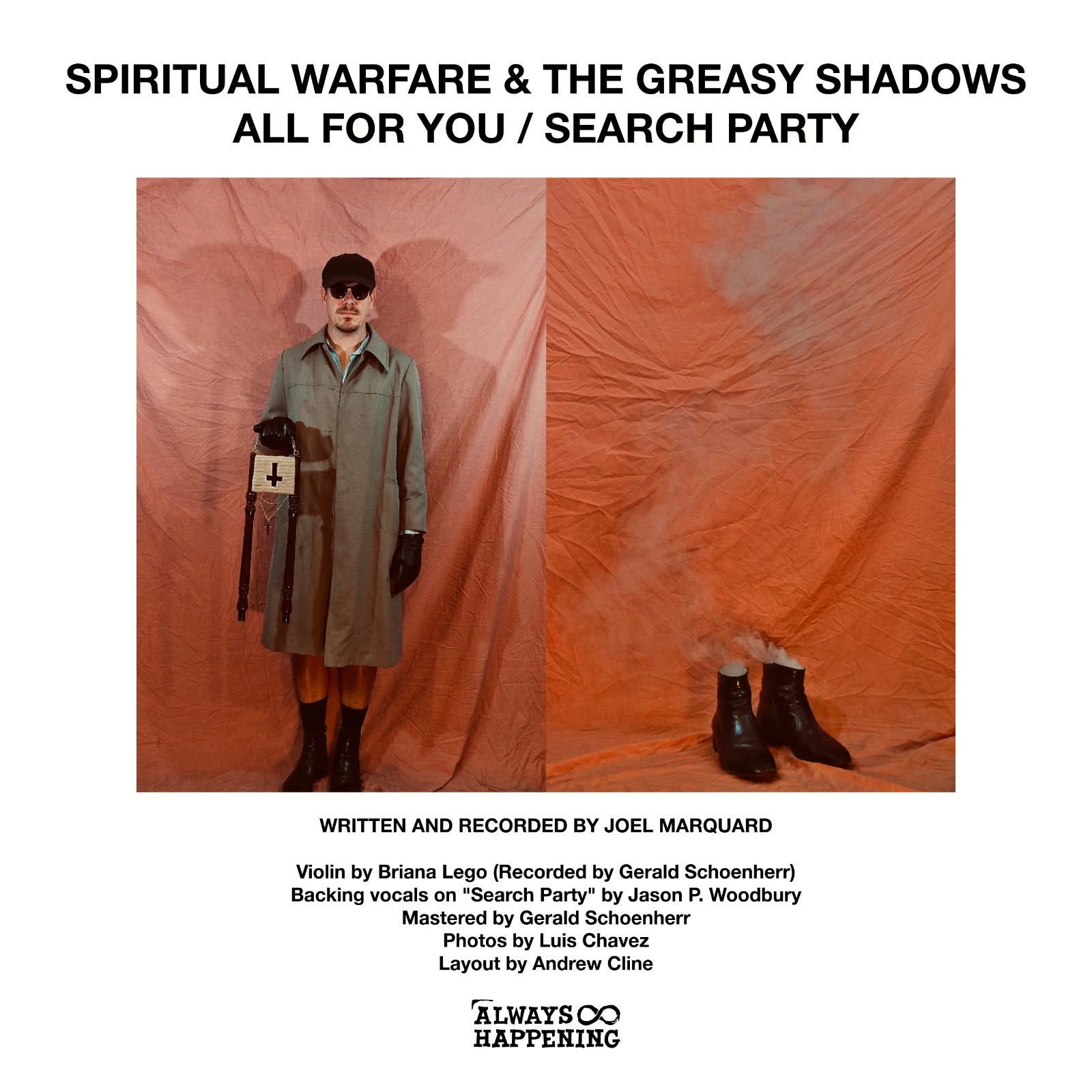
I Took My Enemy’s Hand and I Shook It
Back to Marquard: a 7” single of “All For You” b/w “Search Party” is available now from Always Happening, and the full length double album is streaming on Bandcamp.
I caught up with Joel to discuss Rabbits, Like…In a Meadow and his occluded artistic approach.
Rabbits, Like…In a Meadow is a sprawling record recorded between 2019-2025. Can you tell me a little bit about how you ended up with so much material? Do you tend to be a person who generates a lot of songs?
I actually don’t think that’s a lot for that amount of time [Laughs] But, I work really quickly and chaotically when I record. I usually don’t bother with mic placement or tuning sometimes, and that speeds things up. My last album came out in 2018 I think. So, I’m due for a new album….or two.
It sprawls in terms of sonic approach too. “All For You” is one of my favorites, hence wanting to put it on the A-side of the single we made together. That lyric about taking your enemies hand and shaking it feels very important to me. What was the inspiration behind that line?
I think I heard an interview with some CIA guy or something who was saying if you are about to be killed, you should shake the person’s hand that is about to kill you, and when they feel the human connection, the likelihood that they will kill you drops dramatically. Not sure if that’s true or how they even study that, but I thought it made for a good line. So, if you’re ever in a hostage situation, remember that. [Laughs]
There were some pretty heavy real-life things happening behind the scenes while you were making this, including your wife being involved a really bad automobile accident. Thankfully she’s OK, but I want to ask how mortality and taking stock of life influenced these songs?
Yes, in October of 2023, my wife had a pickup truck turn in front of her at a yellow light and she hit it head on. She was in to hospital for six days. Almost losing someone you love really wakes you up. “Tennis Racquet Of Light” is about three deaths too. I lost my mom to cancer in 2012, and my brother to COVID, and had to put our family dog down shortly after that.
I was in the room when they put our dog down. It was such a surreal experience and I was kinda out of my mind and I was telling our dog to look for my brother and mom in heaven. My mom was a state champion tennis player, so I like to think that she’s doing that in heaven with my brother and dog. I don’t know if heaven exists, but I like to think it does and that I’ll get to be with them all again.
Another side of things: you make this really psychedelic model train videos. How did that concept enter into your head?
I think I was thinking: it would be cool if I had another camera person or some way to move the camera and I thought of that DUPLO—the big LEGOS—train which was my kid’s toy when they were little.
I used to make lots of crazy tracks with them with they were little. I also saw a similar thing done on some Björk DVD that I had where a train goes through all these mirrors and I always thought it was such a cool idea. I usually build a Greasy Shadows World in my house which takes about five hours, then attach my phone to the DUPLO train engine with a rubber band, and run the train through about 10 times with the fog is strongest. I’ve done about seven train videos I think. They take about five hours to do. I only get only a couple minutes of video.
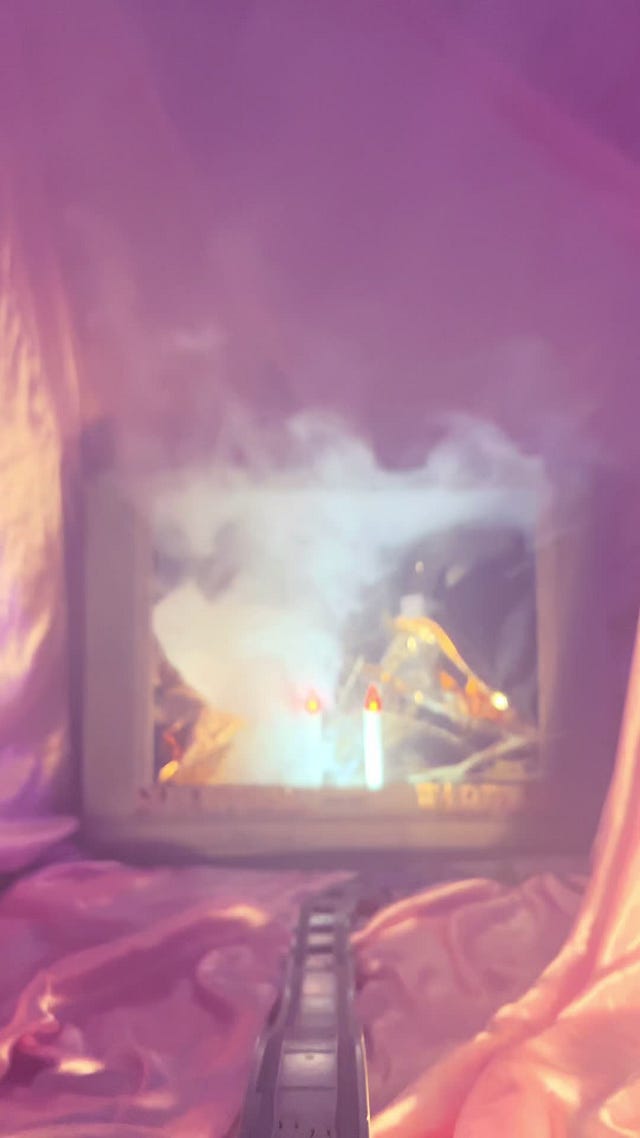
 Tiktok failed to load.
Enable 3rd party cookies or use another browser
If you’re taking a break from music to go grab some food, what are you go-to spots?
Filiberto’s Mexican Food.
“Search Party” is another winner—it was really fun to work on it with you. I feel like there’s a little bit of a girl group feel to that one. What are some of the sonic touchstones you had in mind making this album?
Definitely inspired by ‘60s girl groups, plus Scott Walker, Sun City Girls, Golden-Era Bollywood, Exotica music, Cindy Lee, Death Grips, and lots of others.
It was so fun sitting there on the Hotel Congress patio the other night talking about how Scott Walker, Lou Reed, and David Bowie all ending their careers with daring collaborations with more established groups and combos of players: Sunn O))), Metallica, and Donny McCaslin’s band.
One thing about Spiritual Warfare is you layer these things; there’s usually a lot of layers and reverberation in your songs. It feels communal even if it’s “solo” material.
I would say one of the touchtones and inspirations lyrically and sonically: is kids summer camps. I grew up going to different summer camps my whole life and even worked at Hume Lake in California when I was 13. The album title, Rabbits, Like…In A Meadow, is supposed to be almost like a fictional camp song. “Crying For Our Mommies” came to me out of nowhere one day and I kinda thought of it as a camp-sing-a-long song. Same with “Whistling Insane” and “I Love America”. The album is also a lot about cult-of-personality….which I guess could kinda go along at a summer camp too. [Laughs]
You’ve played a lot of shows over the years with your various projects, Gospel Claws, Dear & The Headlights, Through and Through Gospel Review. What are your favorite memories of playing live, with any of your bands?
I made those two weird, lo-fi, gospel albums under the name Through and Through Gospel Review. Although I’m not religious, I just thought it would be a fun genre to try. In 2012, there was a benefit show so I put together a 12-person band and we did some of those songs. At one point, I think the band got to about 16 people. Playing in a group that big with that many singers was such a blast and definitely lots of good memories doing that.
I feel like often, maybe especially for people who grew up religious and see the world in different ways now, music offers a way to reconnect with the devotional musical heart of spiritual practice.
The recording of “When The Lord Came Down” features a glass breaking sounds—my nod to the Velvet Underground and Nico—so we would build a frame for every show, hang big sheets of glass from it, put microphones on it and broke them during that and song. It was so dangerous [Laughs] So hard to clean up, too. But, definitely lots of other good memories with different groups and projects.
You create handbags with your Blue Jay Way Handbags project. How did you get into that endeavor and do you feel like your creative drive to make objects like those has any overlap with your musical creativity?
I played a Spiritual Warfare and the Greasy Shadows show in Phoenix in 2019, and while I was playing I saw a big pool bag on the stage, so I put it on my shoulder and did the rest of the show with it. I decided I should actually have a big cool bag to wear for my shows from then on.
I was at a thrift store and they had a free bin and there I found this beautiful brown Ralph Lauren suit jacket and that’s what I made my first bag with. I was also inspired by this artist named Scott Hove (Cakeland) who makes these fake, fancy cakes out of plaster, so they last. He puts realistic replicas of animal mouths in the sides of them sometimes. He even made entire rooms that look like you’re in cake. You can buy the plastic replicas of animal mouths from taxidermy suppliers. I still get their catalog in the mail every year. I started putting them in the sides of handbags.
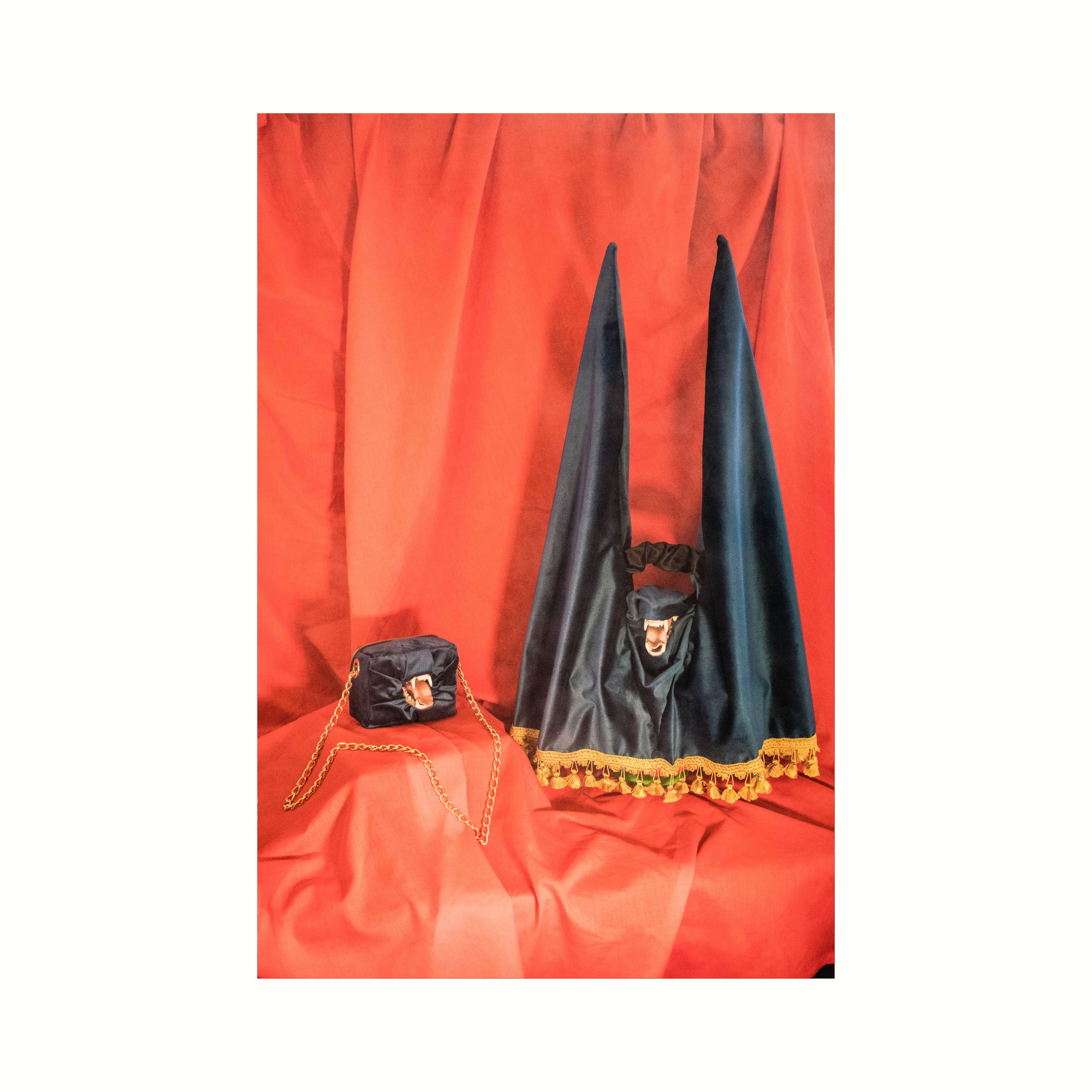
I’ve made 15 different bag designs so far, some with mouths, some without. I use mostly found materials, or fabric from the thrift store or sometimes a fabric store. I was going to start a business out of it, but manufacturing is very expensive and the animal mouths have to be drilled and hand-sewn into the fabric.
Maybe one day I will.
I will say, making a bag is almost the same exact feeling as completing a song or an album. My most recent bag was made out of a dresser drawer with fake marble laminate, and fabric from a couch I found by a trash can on my FedEx route, and there’s an animal mouth in the middle of it. The two blue velvet bags on the cover of the 45 were also made from material that I found from a couch by a trash can on my FedEx route. I have a little razor and just cut a huge piece out of the back.
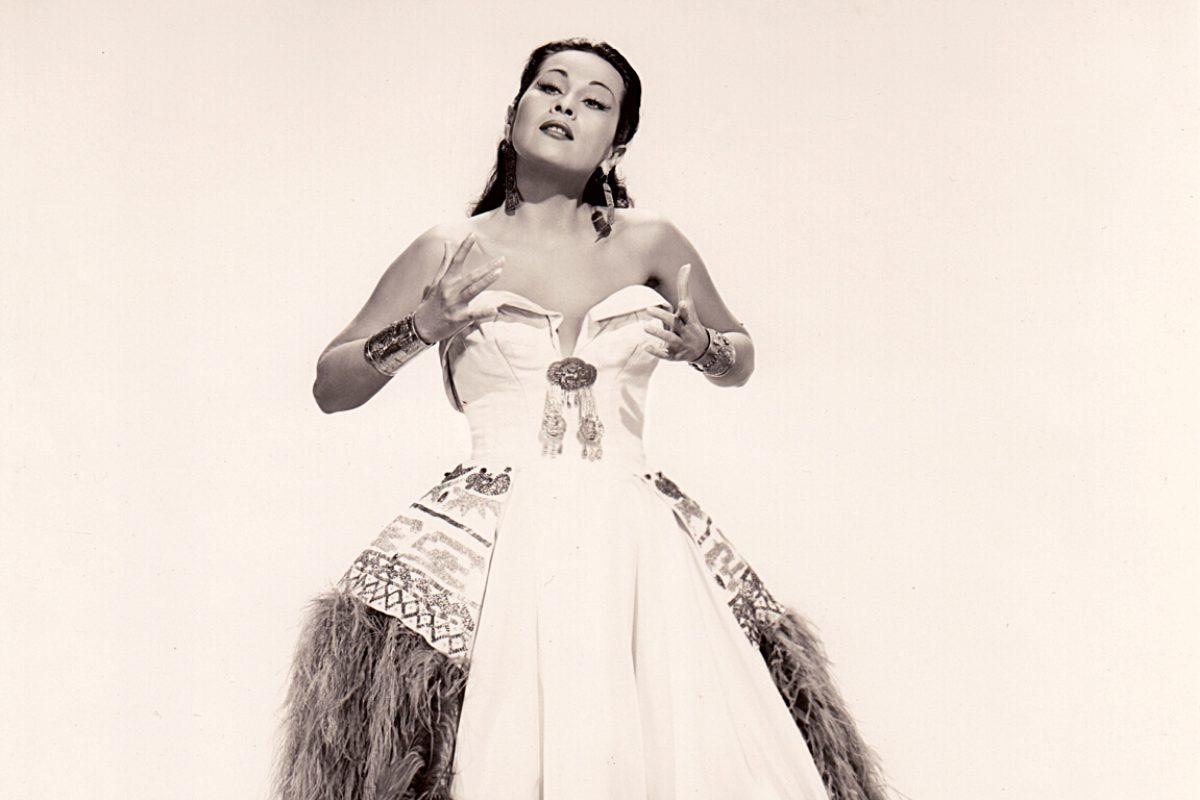
Taboo: Time and Belief in Exotica
For more on the strange—even Philip K. Dick-ian—allure of exotica, let’s turn to JF Martel and Phil Ford’s Weird Studies Podcast, episode 98:
Exotica is a kind of music that was popular in the 1950s, when it was simply known as “mood music.” Though somewhat obscure today, the sound of exotica remains immediately recognizable to contemporary ears. Its use of “tribal” beats, ethereal voices, flutes and gongs evoke a world that is no more at home in the modern West than it is anywhere else on earth. With its shameless stereotyping of non-Western cultures and its aestheticization of the other, exotica rightly deserves the criticism it has drawn over the years. But as we shall see in this episode, if you stop there, you just might miss the thing that makes exotica so difficult to expunge from Western culture, and also what makes it a prime example of how the “trash stratum” sometimes becomes the site of strange visions that transcend culture altogether.